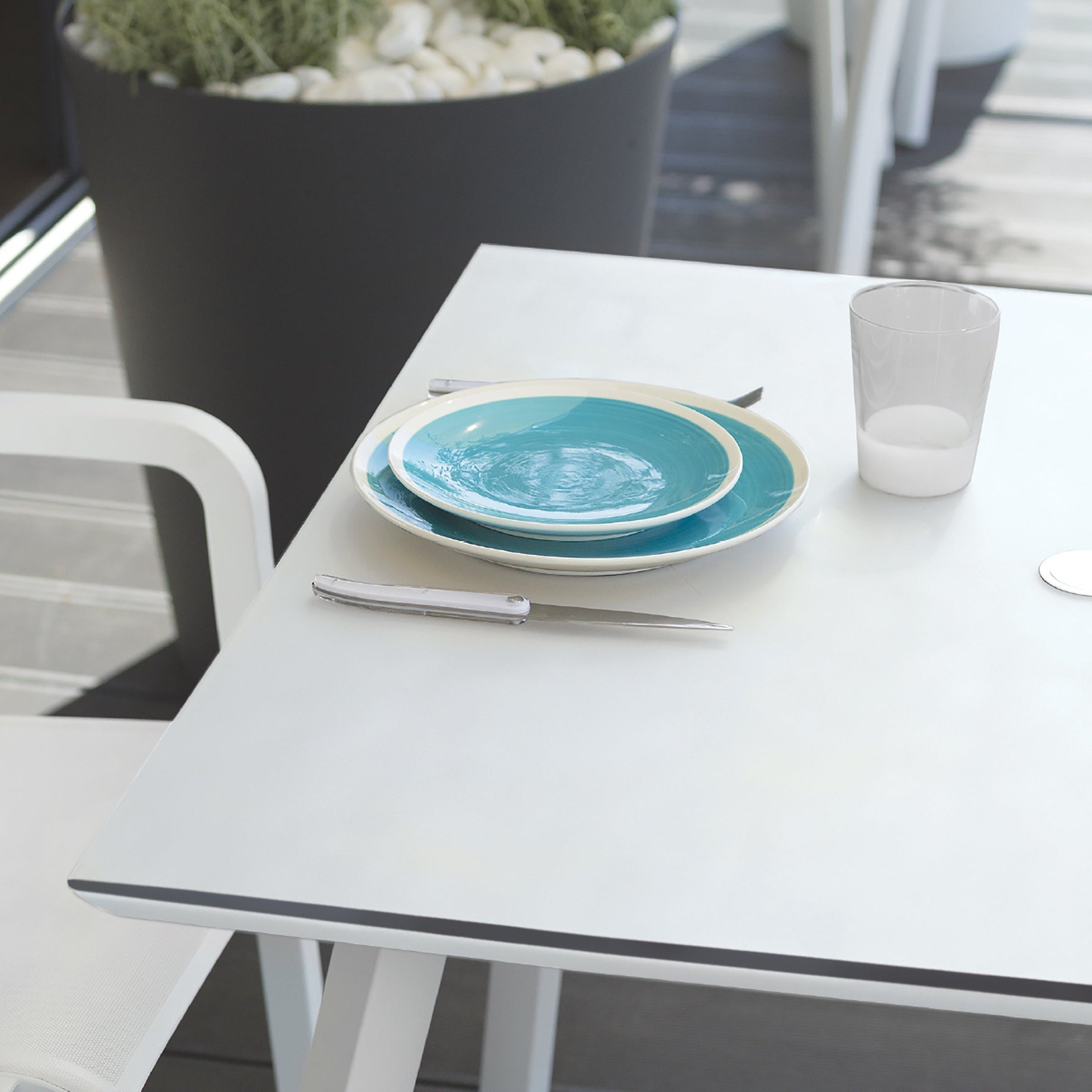

Restaurant and café operators understand that outdoor spaces play an important role in the overall dining experience. A well-designed patio or terrace can welcome more guests, support smooth service, and reinforce a restaurant’s atmosphere — creating a place where people feel comfortable settling in and enjoying their time. When guests are happy and comfortable, it naturally leads to stronger business and more opportunity to reinvest back into the restaurant.
As outdoor dining continues to grow, furniture decisions carry more weight than ever — affecting everything from comfort and durability to the efficiency of day-to-day operations. Pieces that hold up to constant use, are easy to maintain, and can be stored without hassle help limit daily headaches so operators can focus on what matters most: their guests and their team.
For a broad look at choosing the right outdoor furniture for any industry, see our article By Design: Choosing the Right Outdoor Furniture for Your Industry. In this article, we’re taking a closer look at specifically restaurants and cafés.
Here’s what’s shaping outdoor dining in 2026, and how thoughtful furniture selections help restaurants make the most of their outdoor spaces.
Modular & Flexible Layouts: Designing for Revenue Per Square Foot
Fixed layouts could limit revenue potential.

Today’s food service patios deliver multiple functions:
• Morning coffee + co-working
• Weekend brunch rush
• Private events
• Evening cocktails
• Seasonal pop-ups
Fixed layouts could limit revenue potential. Outdoor resin tables that are modular and lightweight paired with stackable stylish seating allow operators to reconfigure spaces quickly and store them efficiently.
Why this matters for procurement:
• Fewer SKUs perform multiple functions
• Less reliance on incremental rental costs
• Faster service transitions between dayparts
Why designers love it:
• Zoning flexibility without permanent construction
• Scalable layouts for seasonal changes
• Cohesive aesthetics even when rearranged
Flexibility isn’t just operational — it helps the restaurant make the most of its space. More configuration options let you welcome guests in different ways, adapt to changing service needs, and create opportunities for the business to thrive.
Mixed Materials: Elevated Aesthetic Meets Commercial Durability
Professional-grade outdoor furniture should be highly durable, weather-resistant, low-maintenance, and withstand heavy use.

Professional-grade outdoor furniture should be highly durable, weather-resistant, low-maintenance, and able to withstand heavy daily use without fading, rusting, or cracking. You can balance these high-performance qualities with layered material palettes to achieve warmth and resilience for your commercial space.
Look for furniture made from:
• Prime grade resin
• Powder-coated aluminum frames
• HDPE and composite tabletops
• Weather-rated faux resin wicker or rope weave cordage
• Textured outdoor fabrics and textiles for seating
Darker tones, matte finishes, and natural textures are dominating commercial patios, but pops of color can really make your space stand out and reinforce your business identity.
The result? Elevated environments that feel curated — not catalog-ordered.
Strategic buying insight
Mixed materials allow operators to align with brand storytelling while maintaining commercial durability standards.
The key is specifying materials that are:
• UV-resistant
• Moisture-resistant
• Commercial-weight rated
• Easy to clean
Procurement teams are prioritizing lifecycle value over upfront cost. Designers are specifying finishes that age well instead of simply photograph well.
Comfort: The Secret Check-Average Booster
A welcoming environment and relaxing seating for dining directly impacts dwell time … and dwell time impacts revenue.

Enhancing comfort and ambiance encourages guests to stay longer (and order more). A welcoming environment and relaxing seating for dining directly impacts dwell time … and dwell time impacts revenue.
Outdoor seating and tabletop designed for the end user - with supportive backs, appropriate seat height, stable armrests, quality materials - reduces guest fatigue. Comfortable guests order another round, appetizers, and dessert.
Operational upside:
• Fewer mid-service seat swaps
• Less furniture repositioning
• Reduced wear from improper use
For café owners especially, the outdoor environment has become an extension of the “third place” concept — a destination for work, meetings, and long stays.
When specifying furniture, ask:
• Is the seat depth appropriate for dining?
• Am I optimizing my place settings (for the end-user’s comfort and operational efficiency)?
• Is the chair weight stable but movable?
• Are all materials commercial grade and rated for high UV exposure?
Comfort is not a luxury line item. It’s a revenue strategy.
Integrated Space Plan: Atmospheres That Keep Guests Coming Back
Fencing and planters are not just decorative — they’re functional infrastructure.

Fencing and planters are not just decorative — they’re functional infrastructure. Even your choices for table and seating configuration become integrated partitions for your space:
• Define zones without hard builds
• Add privacy
• Create visual depth
• Improve acoustics
These considerations reduce spend on structural modifications and provides organic flow without sacrificing capacity. There’s also a marketing advantage. Instagrammable environments drive organic reach. A well-designed patio with thoughtful arrangements serves as free advertising. Ambiance will also help convert first-time guests into repeat customers.
Weatherproof Performance: Buying for Total Cost of Ownership
Remember to look for commercial grade materials that will stand up to harsh climates such as prime grade resin.

Commercial outdoor furniture must survive:
• UV exposure
• Heavy rain
• Spills and repeated cleaning
• High guest turnover
• Staff movement and stacking
Remember to look for commercial grade materials that will stand up to harsh climates such as 1) prime grade resin and high-density polyethylene (HDPE) frames, 2) UV-stabilized aluminum and marine-grade metal table bases, and 3) outdoor performance textiles and fabrics
Smart buyers are asking:
• What is the warranty?
• Are there replacement part options?
• How does the outdoor furniture perform after 3–5 years in high traffic?
The cheapest chair is rarely the least expensive over time. Lifecycle cost analysis is becoming standard practice in foodservice procurement.
Designing for Staff Efficiency = Designing for Profit
Furniture impacts your team just as much as your guests.

When staff can turn tables faster and reset layouts efficiently, you increase throughput without increasing labor costs.
High-performing outdoor spaces now incorporate:
• Stackable chairs for fast resets
• Lightweight but stable frames
• Compatibility with umbrella mounts
• Modular tables that reduce reconfiguration time.
Furniture that supports workflow:
• Reduces physical strain
• Improves service speed
• Increases tip potential
• Enhances overall guest satisfaction
Design and operations are no longer separate conversations. The best-performing cafes and patios are engineered for both.
The Bigger Picture: Outdoor Space as Revenue Real Estate
You’re not just sourcing tables and chairs, you’re influencing.

Forward-thinking operators view patios as:
• Brand amplifiers
• Social media assets
• Seasonal revenue multipliers
• Flexible event spaces
• Labor-efficient service extensions
For procurement professionals and designers, the mandate is clear: specify furniture that balances durability, adaptability, comfort, and aesthetic integrity.
You’re not just sourcing tables and chairs. You’re influencing:
• Guest dwell time
• Average check size
• Labor efficiency
• Brand perception
• Long-term capital expenditure
Turning Patios Into a Competitive Advantage
Commercial-grade outdoor furniture is no longer a decorative afterthought — it’s a strategic investment. With modular layouts, mixed-material sophistication, comfort, arrangement, and weatherproof performance, your outdoor space becomes more than seating capacity. It becomes a competitive advantage. The most successful restaurant and café operators won’t simply add patio furniture. They’ll engineer outdoor environments designed to perform.
Ready to Design an Outdoor Space that Works for Your Restaurant?
Our team is here to help you choose durable, commercial-grade furniture that supports your service, your guests, and your business. Contact us to start the conversation.